
Last updated
How Often Does a Septic Tank Need Pumping?
Every 3 to 5 years for a typical residential tank, and that range is driven by two things: tank size and how many people live in the house. A bigger household fills a tank faster, and if you are staffing a jobsite instead of a home, how many porta potties do i need covers the equivalent math for crews. Smaller households with a larger tank can stretch the interval closer to 5 years. North Peoria homes on older systems sometimes need a shorter cycle if the tank was undersized when it was installed. If you are not sure where your house falls, how often to pump a septic tank walks through the sizing math in more detail. Waiting too long backs up solids into the drain field, and that repair costs far more than a pumping visit ever will, similar to how skipping porta potty rental checklist steps on a jobsite leads to bigger problems later. If you are building new or adding a bathroom, septic tank cleaning covers what a fresh system needs in year one. Renovation projects that need interim toilets while the septic line is disconnected can pair this service with home renovation porta potty rental for the crew.
What Are the Warning Signs of a Full Septic Tank?
Slow drains, gurgling pipes, and a wet or spongy patch over the drain field are the big three. Sewage odor near the tank lid, or standing water pooling after rain when it did not before, both point the same direction. Toilets that back up when you run the washing machine are another classic sign the tank is at capacity, the septic equivalent of the overflow issues covered in do porta potties smell. Septic tank warning signs goes through the full list with more detail on each one. Catching it early keeps the job a simple pump-out instead of a drain field repair. If you notice any of these signs on a property near Peoria Heights, 3.1 miles east of North Peoria, or out toward Washington, 12.1 miles east, call before the weekend. A tank that backs up on a Saturday turns into a same-day emergency call, and those cost more than a scheduled visit.

What Does a Septic Pumping Service Include?
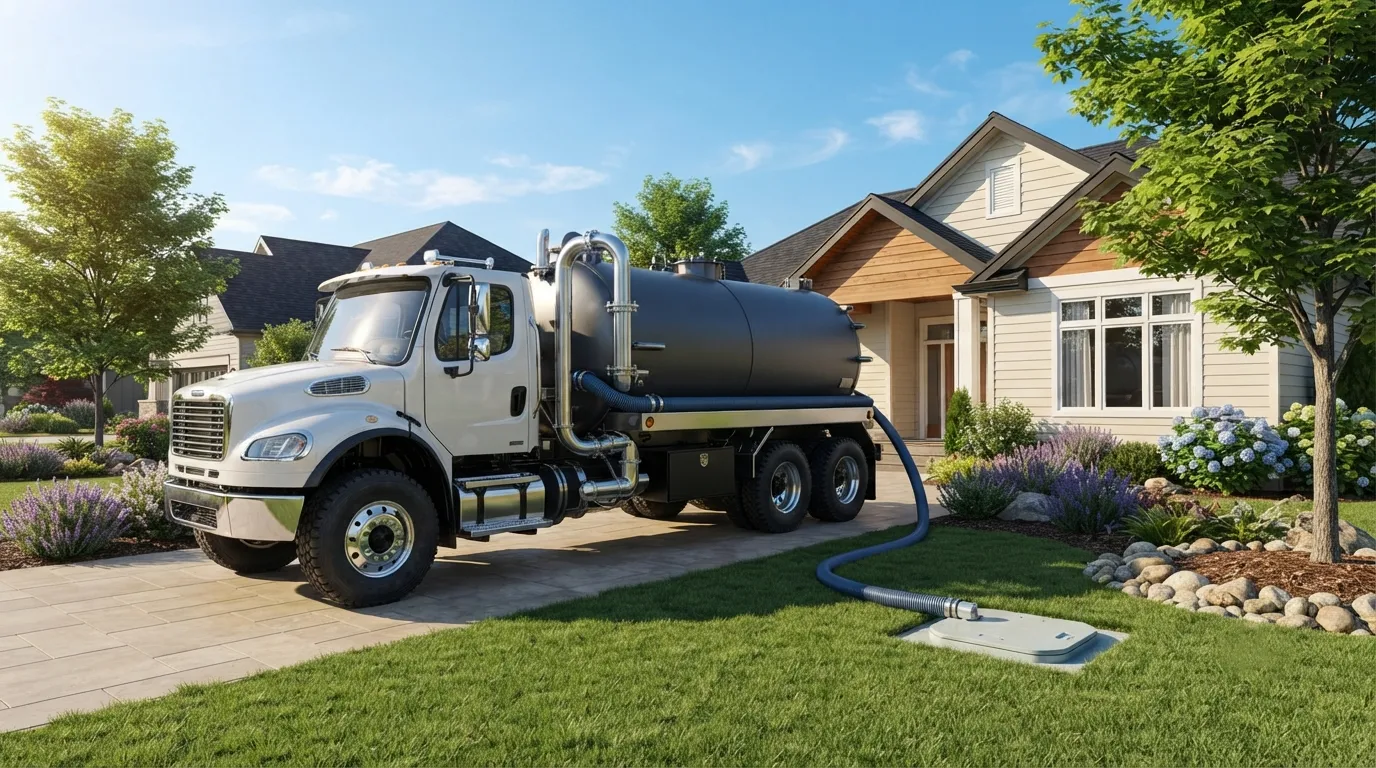
A standard visit means locating and uncovering the tank lid, pumping the tank empty, and a visual check of the baffles and tank walls for damage or cracking. The crew checks the inlet and outlet baffles since a broken baffle lets solids into the drain field, which is the expensive failure mode we are trying to avoid. Most visits also include a quick assessment of the drain field surface for wet spots or unusual settling. We haul the waste off site for proper disposal, the same disposal discipline that governs what cannot go in a dumpster on the roll-off side of the business. If your property runs a grease interceptor instead of, or alongside, a residential tank, grease trap pumping follows a different service trigger: it gets pumped once fats, oils, grease and solids reach 25 percent of the liquid depth, not on a fixed calendar. Restaurants and event kitchens in North Peoria should track that percentage rather than guess at an interval. For a broader look at what is billed and why, septic tank pumping cost breaks the line items down.

How Much Does Septic Tank Pumping Cost?
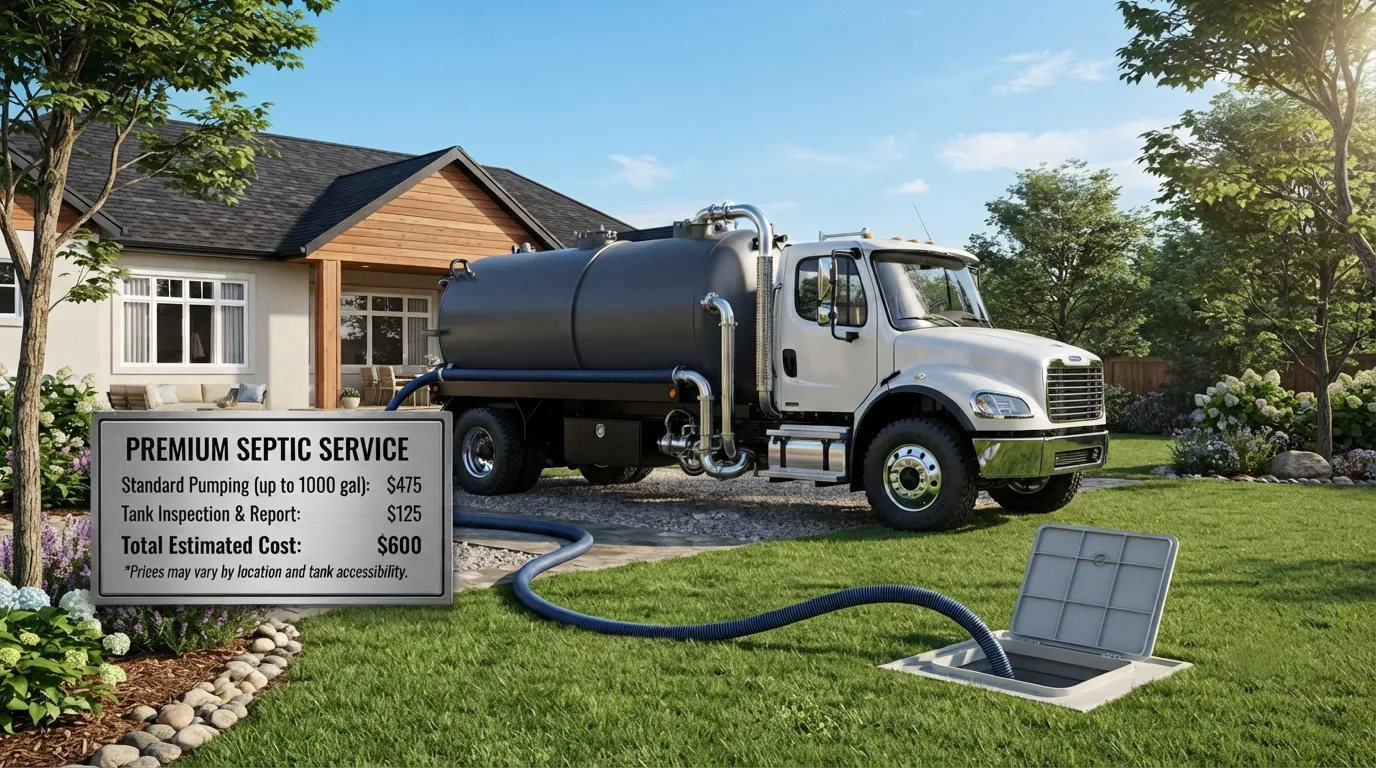
Cost depends mostly on tank size and access. A straightforward pump-out with easy truck access sits at the lower end of the range; a tank buried deep or blocked by landscaping costs more because of the extra digging and hose length. Emergency and weekend calls run higher than a scheduled weekday appointment, much like the weekend premium on porta potty rental per day pricing.
| service | duration | typical range |
|---|---|---|
| septic pumping | day rate | $150 to $300 |
| septic pumping | weekend | $50 to $150 |
Those figures cover the pumping visit itself. A 1,000 gallon tank on flat ground with a clear access path sits toward the low end. A tank under a deck, or one that has not been pumped in over 5 years and has heavier solids buildup, sits toward the high end, the same access-driven pricing logic explained on temporary fence cost and dumpster rental cost. Septic tank pumping cost has more on what pushes a job up or down that range, and septic pumping service itself is the page to bookmark for scheduling. If you are comparing this against a portable option for a construction site instead, porta potty rental cost and construction site services run through that side of the budget.
Do You Offer Holding Tank Service for Properties Without Septic?
Yes. Some properties, especially new builds, remote lots, or sites waiting on a permanent septic install, use a holding tank instead of a conventional system. We deliver, service, and pump holding tanks on a recurring schedule that matches how many people are using the property day to day, the same logic behind monthly porta potty rental scheduling. Holding tank rental covers setup and pricing for that option. This is common on construction sites too, where construction dumpster rental and temporary power pole are already part of the site setup and a holding tank rounds out the sanitation side before permanent utilities go in. Farms and agricultural operations with seasonal labor also lean on this option; farm and agricultural restrooms and OSHA 1928.110, which sets field sanitation requirements for potable water, toilets and handwashing at one facility per 20 hand-labor employees within a quarter mile walk, both apply if you are staffing seasonal crews rather than running a single household system.
What Happens During an Emergency Septic Call?
A dispatcher gets your address and a description of the problem first, backup, odor, standing water, so the crew arrives with the right size truck, the same intake process used for porta potty permit requirements questions on the toilet side. Response is prioritized for active backups over routine pump-outs, since a backup can push sewage into the house if it sits too long. Emergency septic service is built around that same-day response model. North Peoria sits close enough to East Peoria, 10.5 miles southeast, and Morton, 15.1 miles southeast, that most calls in that radius get same-day coverage too. Pekin, at 19.8 miles south, is a longer haul, so calling early in the day helps. If the emergency is tied to a construction site rather than a home, pair the call with emergency porta potty rental to keep the crew working while the septic issue gets resolved. For anything involving standing wastewater near a work crew, OSHA 1926.51(c)(1) still governs how many toilet facilities need to be on site regardless of the septic situation.
North Peoria Porta Pros services both sides of this job: the tank itself and whatever sanitation gap the outage creates while it is offline. If your property also needs short-term restroom coverage during the pump-out, portable restroom rental or standard porta potty rental can bridge that window. Larger households or properties hosting an event might prefer restroom trailer rental instead, particularly the 4 stall restroom trailer for a family gathering while the main bathroom is unusable, or the 2 stall restroom trailer for a smaller crew, with restroom trailer rental cost laying out the price bands. Whatever the scale, request a quote gets a crew scheduled, and contact reaches dispatch directly for anything urgent.
How much does 1000 gallon septic tank pumping cost?
Pumping a 1,000 gallon tank generally falls in the $150 to $300 day-rate range, with access difficulty and time since the last pump-out driving where in that range you land. A tank that has gone past the typical 3 to 5 year window often costs more due to heavier solids.
How often should I pump my septic tank?
Every 3 to 5 years for most residential tanks, based on tank size and household size. A larger household should lean toward the shorter end of that window. See how often to pump a septic tank for the specifics.
What are the signs my septic tank needs pumping?
Slow drains, gurgling pipes, sewage odor near the tank, and wet spots over the drain field are the main signs. Septic tank warning signs covers the complete list and what each one usually means for the tank underneath.
Is emergency septic pumping available in North Peoria?
Yes. Active backups get priority dispatch over scheduled pump-outs. Weekend emergency calls run higher than a weekday visit, generally in the $50 to $150 range depending on scope. See emergency septic service for response details.
Do you service grease traps separately from septic tanks?
Yes. Grease interceptors get pumped once fats, oils, grease and solids hit 25 percent of the liquid depth, not on a fixed calendar like a residential tank. Grease trap pumping covers restaurant and event kitchen scheduling.
What is a holding tank and when do I need one?
A holding tank is used when a property has no conventional septic system, common on new builds or remote sites. It gets serviced and pumped on a recurring schedule. Holding tank rental has setup details and pricing.
Next step
Get a delivery date
Tell us the address, the dates and the headcount. We size the order and confirm the route.